
30th April 2026
Auckland primary schools are reporting a troubling pattern in the developmental readiness of children entering school. A survey, commissioned by the Auckland Primary Principals’ Association and completed by 120 primary and intermediate schools in the region, found that nearly 90 percent of respondents said they were seeing increases of news entrants who lacked basic skills such as talking, knowing the letters of their own name, and using the toilet independently. Schools also reported challenges in areas including dressing and pencil control.
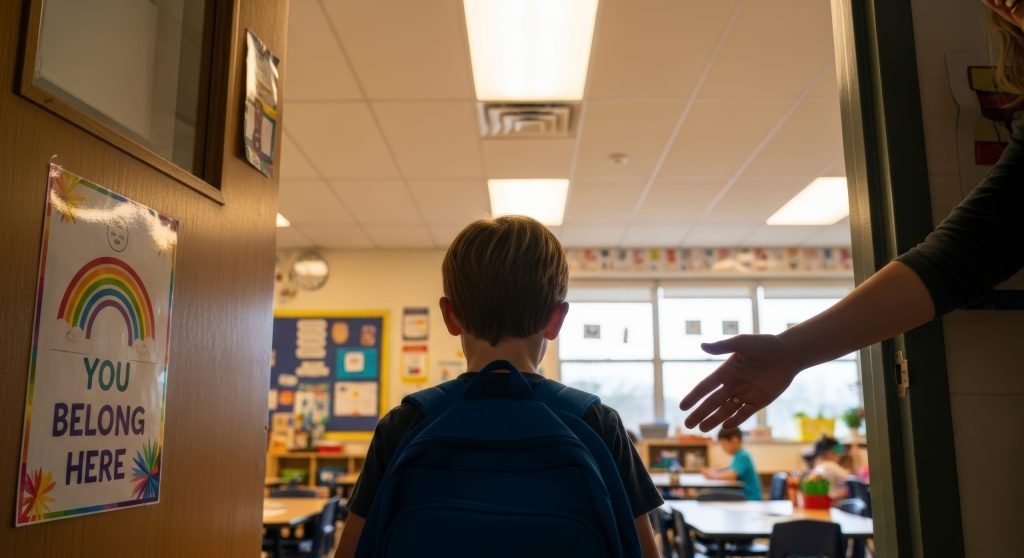
Principals described some children entering Year 1 with developmental levels more similar to younger age groups, particularly in self-management and oral language. Schools highlighted concerns about children’s ability to engage with classroom routines and tasks without additional support.
Foundations Matter
For Professor Kirsty Ross, Head of the School of Psychology at Massey University and a clinical psychologist specialising in child, youth, and family mental health, the issue reflects a broader understanding of what it means to be ready for school. “From a developmental psychology perspective, school readiness is holistic and multidimensional. It’s not about a single skill like knowing the alphabet; it’s a profile across several interrelated domains that together allow a child to engage with the classroom environment,” she explains.
Ross identifies five key domains children typically develop between ages four and six:
1. Language and communication – children should be able to speak in simple sentences, understand basic instructions, take turns in conversation, and follow a short story. “These skills are critical because language underpins learning, relationships, and classroom participation,” Ross says.
2. Social and emotional development – including separating from a caregiver without significant distress, playing cooperatively with peers, recognising and naming basic emotions, and sharing and taking turns. “These skills reflect a child’s ability to function within a group setting. The latter two are emerging skills in small children, rather than fully developed skills,” she notes.
3. Self-regulation – arguably the most important domain. This includes sustaining attention, following simple rules, managing frustration without becoming overwhelmed, and responding to adult guidance. “Research shows that self-regulation – attention, executive function, and emotional control – can be as important, or even more important, than general intelligence in predicting early academic outcomes,” Ross explains.
4. Early cognitive and academic skills – recognising their own name, knowing some letters, numbers, colours, or shapes, and showing curiosity and willingness to learn. “This reflects readiness to learn, rather than knowledge itself.”
5. Physical and self-care skills – being toilet trained, managing basic dressing and feeding independently, and having sufficient fine and gross motor skills for classroom tasks. “These allow children to function independently in a structured setting.”
The Concerns and Causes
Ross stresses that school readiness is not about being academically ahead. “It’s about whether a child has the language, social, emotional, and self-regulatory foundations to participate in learning. If one domain – particularly self-regulation or language – is underdeveloped, it can have a disproportionate impact on how well a child settles into school.”
She explains multiple factors contribute to children starting school underprepared: limited early language exposure, socioeconomic stress, reduced opportunities for play and social interaction, developmental conditions, and high screen use replacing interactive experiences. “We also see broader shifts toward less structured play, which is crucial for developing regulation and social skills,” Ross says. She also notes, “Adversity in early life – for children and their own parents’ early experiences – can impact on how children’s brains develop, and the relational development between parents and children.”
Impact on Children and Classrooms
Children may struggle to follow instructions or stay engaged, experience frustration or behavioural difficulties, and may have difficulty forming peer relationships. “Over time, this can affect academic progress, self-esteem and a sense of competence,” Ross warns. Teachers face wide developmental variation within one classroom, which can increase the cognitive and emotional load and shift focus from teaching to behavioural support.
Support and Solutions
Ross emphasises the importance of relationship-based approaches, structured but flexible routines, explicit teaching of social and emotional skills, and small-group or targeted support. “Crucially, schools cannot do this alone – partnership with families (and indeed communities) is essential. Policies and funding support is also crucial to ensure teachers have the professional development and support in-class they might need.”
She also points to early interventions: “Neural circuits that create the foundation for learning, behaviour, and health are most flexible in the first three years of life – over time, they become increasingly difficult to change, meaning earlier intervention is more effective. We do maintain neuroplasticity throughout much of our lives, so intervention later in childhood is also helpful!”
Simple, relational interventions such as talking with children frequently, shared reading, play-based learning, and supporting self-regulation through routines are highly effective. “School readiness isn’t about knowing letters and numbers – it’s about having the social, emotional, and communication skills to engage with learning. When children struggle, it’s rarely about motivation – it’s about whether they‘ve had the developmental opportunities to build those foundations,” Ross concludes.