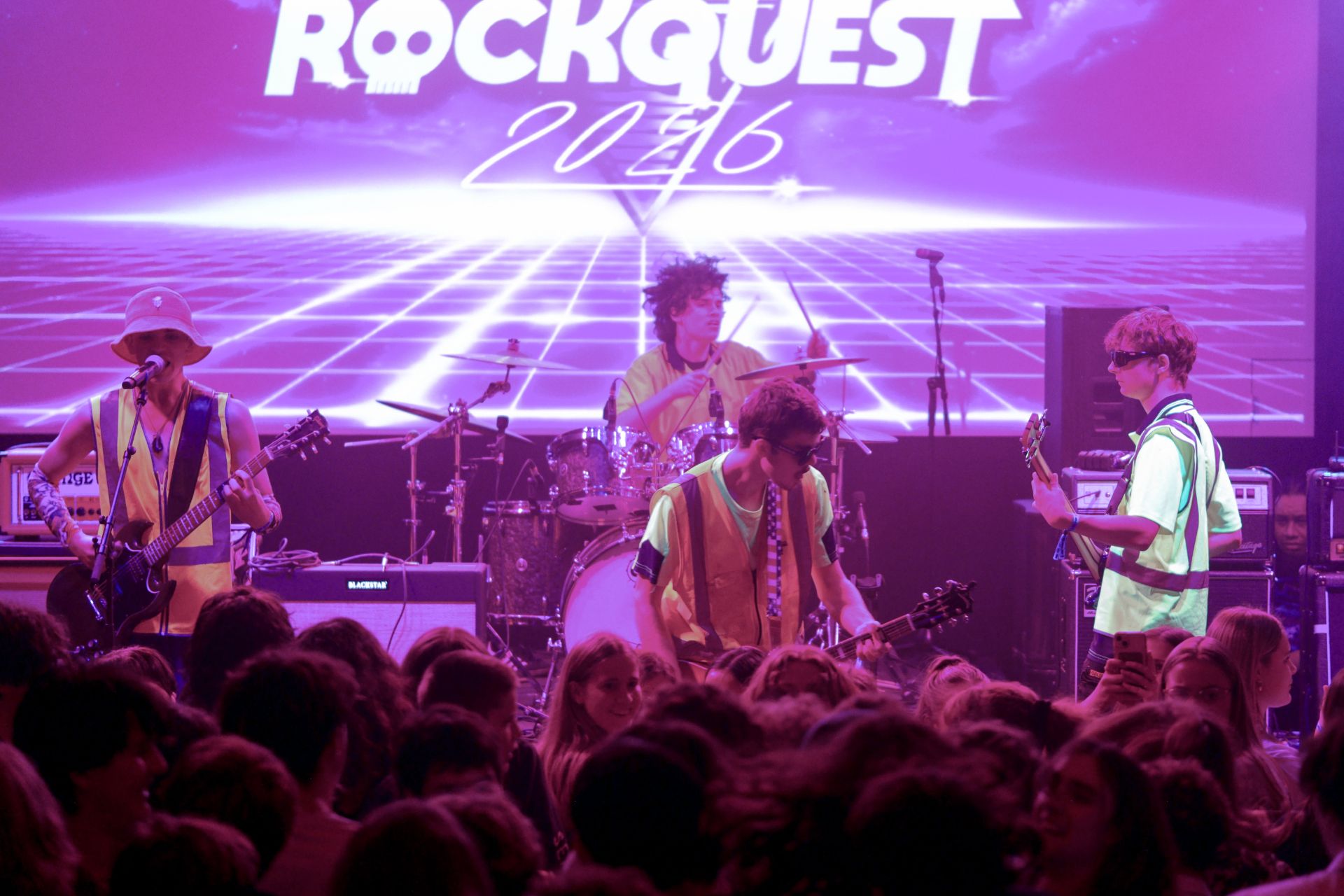

On a winter Friday night, 400 teenagers packed into Tōtara Street in Mount Maunganui, knew each other’s lyrics, and sang them back at the stage from the mosh pit. The Bay of Plenty final of Smokefreerockquest had sold out. A week of regional finals in late June looked much the same around the country: a full theatre in Blenheim, a twelve-band bill in Rotorua, another in Hamilton, all of them secondary students performing original music they had written themselves.
Smokefreerockquest is undeniably iconic. The annual tour reaches 22 regions over two months, from Whangārei to Invercargill. Rockquest Promotions, founded by Glenn Common and Pete Rainey in 1988, says it works with more than 15,000 young people and 35,000 audience members a year across music, dance, songwriting, film and fashion, which it reckons makes it the largest provider of creative arts opportunities outside the classroom. This year, the Rockquest programme was at participant capacity, with the highest number of acts ever.
Instrumental rock band R.A.G.E, from Te Kura Kaupapa Māori o Huiarau, won the Rotorua final. The original band was formed by their parents, who competed in Rockquest a generation ago. The current line-up has picked up where they left off. “We come from somewhere so small,” they said after the win. “There’s not many opportunities for young people in Rotorua.” Running alongside the main contest is Smokefree Tangata Beats, a nationwide platform for original music that celebrates the identities and cultures of Tangata Whenua and Pasifika students, and it featured on most of the regional bills.
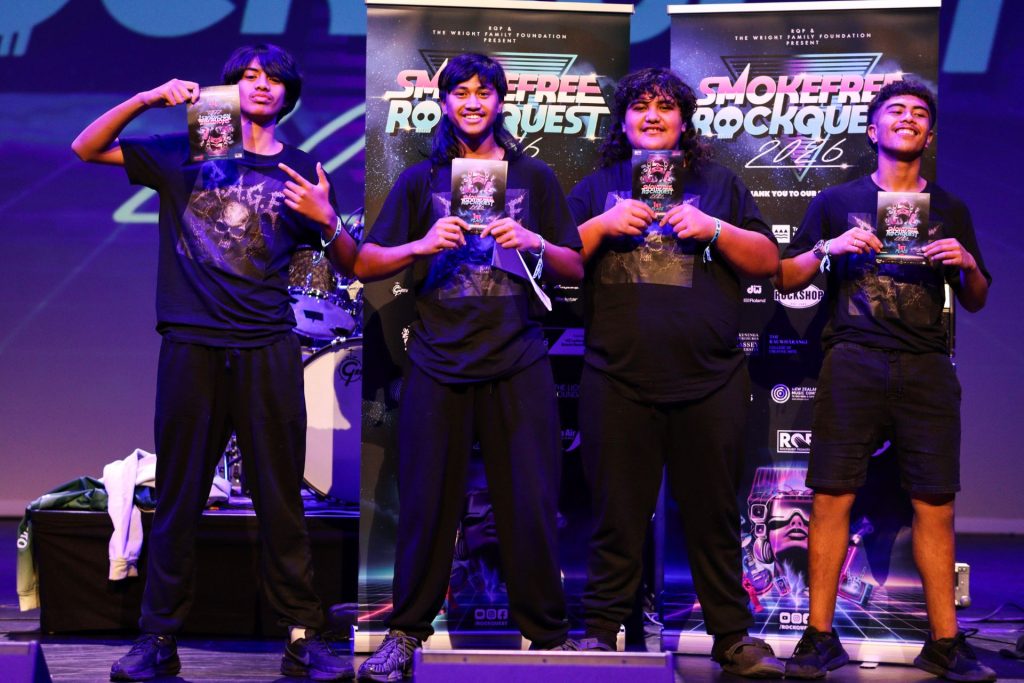
Jess Cruzon, who took out the Marlborough solo and duo category as Jess (& Qalo), put her entry down to a teacher. “I wouldn’t have done this, or had the opportunity to do this, if it wasn’t for her,” she said of Ms Morgan. Amoeba’s Isaac Moore, in his third and final year of the competition, said knowing what to expect on a professional stage was exactly what made the night work. Winning bands in Hamilton and the Bay of Plenty thanked their school music departments by name.
The regional winners now move to a video submission round, the next step towards the 2026 national finals, and these four finals alone send a sizeable contingent forward. From the Bay of Plenty it’s pop band Grizzlyfish (Tōmoetai College) and Spud (Mount Maunganui College); from Rotorua, R.A.G.E and Super 7 (Tarawera High School); from Hamilton, Parade (Hamilton Christian School) and Lipstink (Hillcrest High School); and from Marlborough, Amoeba and The Beans (both Marlborough Boys’ College). Each goes through alongside the top solo and duo acts from its region, among them Marlborough’s Jess (& Qalo), and the Smokefree Tangata Beats winners, who advance the same way.
That’s a lot of young people putting original songs in front of a professional sound system and a paying crowd. Co-curricular music is easy to treat as a nice-to-have when budgets and timetables are tight, but for some of these students it’s the first professional stage they have stood on, and for a few it’s one of the few chances their town offers. The music room that stays open after the bell is doing more than filling an evening.