
Niko Purdie on the hackathon for high schoolers, by high schoolers
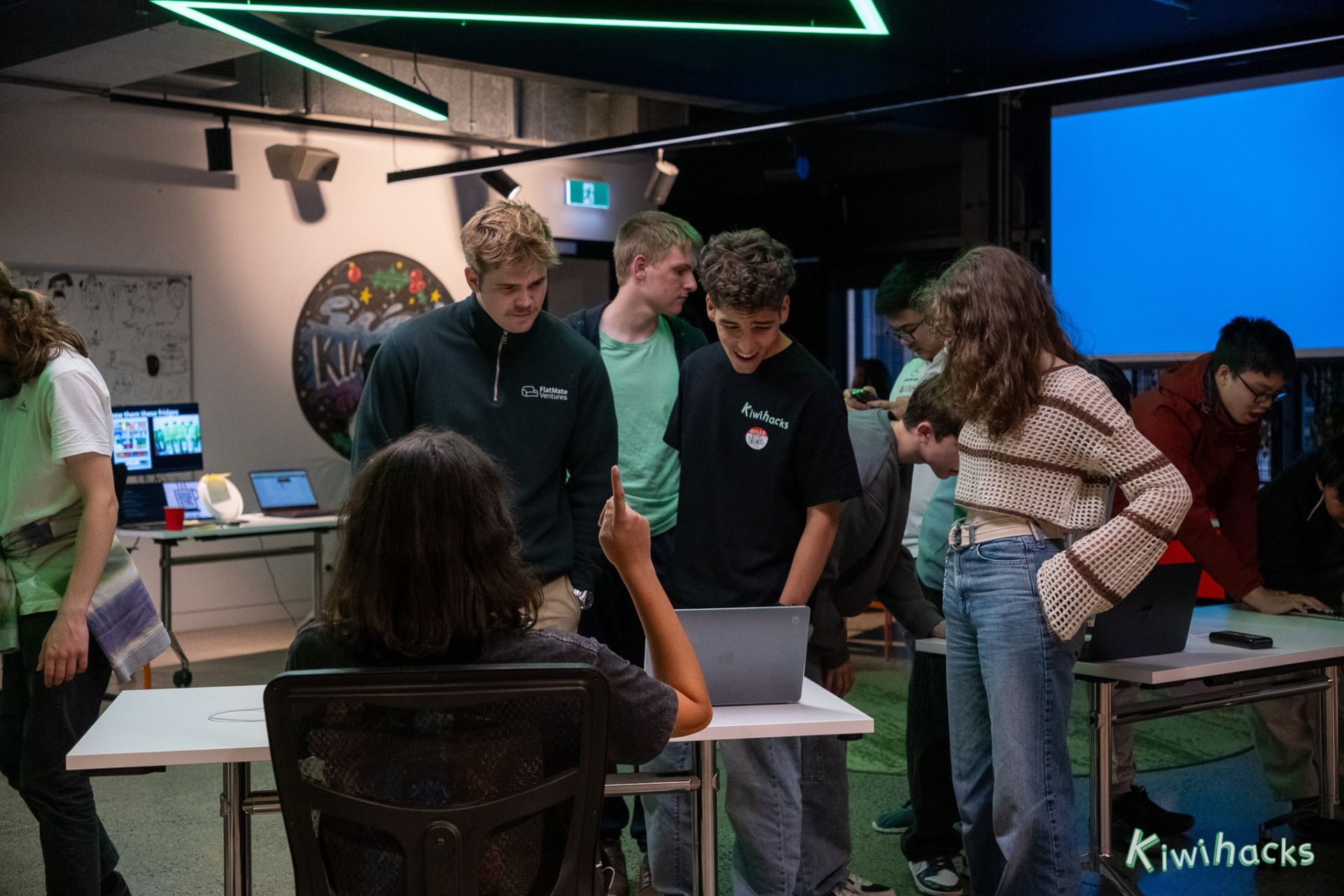
KiwiHacks is New Zealand’s first high school hackathon club, running free 24-hour hackathons for students aged 13 to 18. Everything from the website and art to the sponsorship deals is organised by high schoolers. Across late September and early October, its Nova series took three hackathons to Wellington, Christchurch and Auckland.
A hackathon is a time-boxed invention event. Teams build apps, games, websites and hardware projects, and many students write their first line of code at the event. Past KiwiHacks projects include the World’s Worst Keyboard, which types one letter at a time using a knob and a button.
Others include a cooking game in the style of Overcooked!, built in Unreal Engine, and a custom interface framework for Linux written by a 13-year-old. The list of incredible projects goes on.
Founder Niko Purdie, a 17-year-old Sacred Heart College student, says the name is the biggest misconception. “A hackathon isn’t a period of time when you go and hack a company. It’s a period of time when you invent, when you build. If it was illegal, we’d be locked up for a while.”
Niko’s interest in coding began in the principal’s office. At age eight, he got files onto his school’s server that left teachers unable to access their own work. “After a very angry call to the principal’s office, I wanted to learn how to hack.”
He started coding at nine and was later flown to Austin, Texas, to compete in a high school hackathon, which he describes as a life-changing experience. “I came back and I wanted to bring that experience to Kiwi high schoolers. There’d never been a hackathon for high schoolers before the hackathon I ran.”
The first KiwiHacks event, in November 2024, drew about 10 students. Niko ran the next few solo, growing them to 30 attendees. “I realised that I couldn’t do it myself, so I brought on a team of exceptional high schoolers who had really impactful experiences at the events.” Now, well over 120 students attend each hackathon, run by the KiwiHacks team of seven.
“When I started, I just wanted to run a cool hackathon, and so I went in with no plan,” Niko says. “There were lots of little things that went wrong over the course of the event, and I took all those learnings and applied them to the next one. After eight hackathons we’ve learnt a lot!”
The team ensures attendees have a safe and memorable experience. Events are supervised around the clock at one staff member to every 15 attendees, with sign-in and sign-out, first aid on site, signed agreements and parent information sessions. Mentors come from leading New Zealand start-ups.
For high schoolers, by high schoolers
Niko says peer organisers know what attendees want. Recent events have included karaoke and a surprise at midnight. “Last time it was ice cream sandwiches.” There’s also a strong sense of camaraderie and community.
High schoolers vote on the winning projects rather than a panel of experts, which keeps the focus social rather than competitive. The bond between organisers and attendees runs deep enough that one team’s project was a game about burning Niko’s house down. It placed third.
The team are all volunteers, and they’ve signed up some big-name backers. Gold partners GD1 and Simplicity, silver partners Auror, FireEyes, and DoAI, and in-kind partners Canva help keep overheads close to zero. “High schoolers can take on a lot more responsibility and be a lot more ambitious than people think,” Niko says.
Events are free, with food, workshops and mentoring covered by sponsors, and students without a laptop can borrow one for the duration of the event. “You just need to bring yourself,” Niko says. “This is an opportunity for anyone to get the experience of building something from scratch and figure out a pathway to their dream career in tech, or gain the skills to found their own startup.”
Going international
Nova ran at Do AI in Wellington, Partly HQ in Christchurch and MIT’s Ngā Kete Wānanga Marae in Ōtara. The team chose the Auckland venue after no South Auckland students signed up for the previous hackathon. “We felt we should bring KiwiHacks out to South Auckland.”
Next year KiwiHacks plans five hackathons, including its first in Sydney, and within two to five years hopes to run events across the Asia-Pacific. Niko points to the United States, where high school hackathons are common. “It’s normal to talk with your parents like, ‘Hey Mum, Hey Dad, I’m going to be at this hackathon for 24 hours, I’ll be back Sunday afternoon’.”
KiwiHacks regular Alex Liang was one of 50 Distinguished Winners in Apple’s 2026 Swift Student Challenge and has since mentored other attendees on getting started with the Challenge.
For students who are nervous about taking part, Niko’s message is simple. “Just give it a go. You’ll meet a lot of lifelong friends, and all it is, is one weekend to get started.”
More information is available at www.kiwihacks.org