
Skin cancers are the most common cancers diagnosed in Aotearoa, and among the most preventable. The Cancer Society says more than 95% of skin cancers could be prevented by reducing exposure to ultraviolet (UV) radiation.
A lot of that exposure happens at school. Sun protection is recommended whenever the UV Index reaches 3 or above, which for most of the country means September to April, especially between 10am and 4pm. That’s all of Terms 1 and 4, during school hours.
The Cancer Society’s sample school policy notes that young people’s exposure can be higher on school days than at weekends, so a school’s timetable, uniform and shade decisions change how much sun its students get.
Why lunchtime matters
UV is highest when the sun is at its highest point in the sky, a moment known as solar noon. The sun’s rays travel a shorter distance through the atmosphere and ozone layer at that point, so more UV reaches the ground and unprotected skin can be damaged in a short time.
Solar noon isn’t 12 o’clock. New Zealand’s clocks are set to a longitude well east of the country, and daylight saving adds another hour, so in summer the sun peaks after midday. It falls between about 12.50pm and 1.20pm in Gisborne, and between 1.30pm and 2pm in Invercargill. Peak UV often lands on the lunch break, when the most students are outside at once.
New Zealand’s UV is strong by international standards too. Clearer air with less pollution means less UV is absorbed or scattered on its way down. NIWA puts peak UV Index levels here at roughly 40% higher than at comparable latitudes in the Northern Hemisphere, because of differences in ozone, the distance between the earth and the sun, and pollution. The Cancer Society notes that New Zealand and Australia have the highest melanoma incidence rates in the world.
The lunchtime peak matters, but the 10am to 4pm guidance still covers the whole school day. UV can’t be seen or felt, so people tend to judge the risk by temperature or cloud cover. That’s an easy mistake in a country with relatively cool summers. UV can be high on a cool or cloudy day, and people stay outside for long periods without enough protection.
The damage adds up. UV exposure builds over a lifetime. The Cancer Society describes childhood and adolescence as critical periods when that build-up can become an important risk factor for skin cancer later in life.
The UV Index measures the strength of UV reaching the ground at a given place and time. It turns a complex measurement into one number a school can act on. The higher it goes, the greater the risk of skin and eye damage, and the less time unprotected skin takes to burn.
Checking the daily UV Index helps with planning. From September to April, the Sun Protection Alert on the MetService website and app shows the times each day when protection is needed, and schools can add the alert to their own website as a widget. The free UVNZ app gives local UV levels.
Outdoor time still matters. The sample policy encourages outdoor activity all year for its wider health benefits, vitamin D among them, with protection whenever the UV Index reaches 3. Children with a health condition, or on medicines such as some antibiotics that make them sensitive to the sun, should be protected all year.
What leaders can change
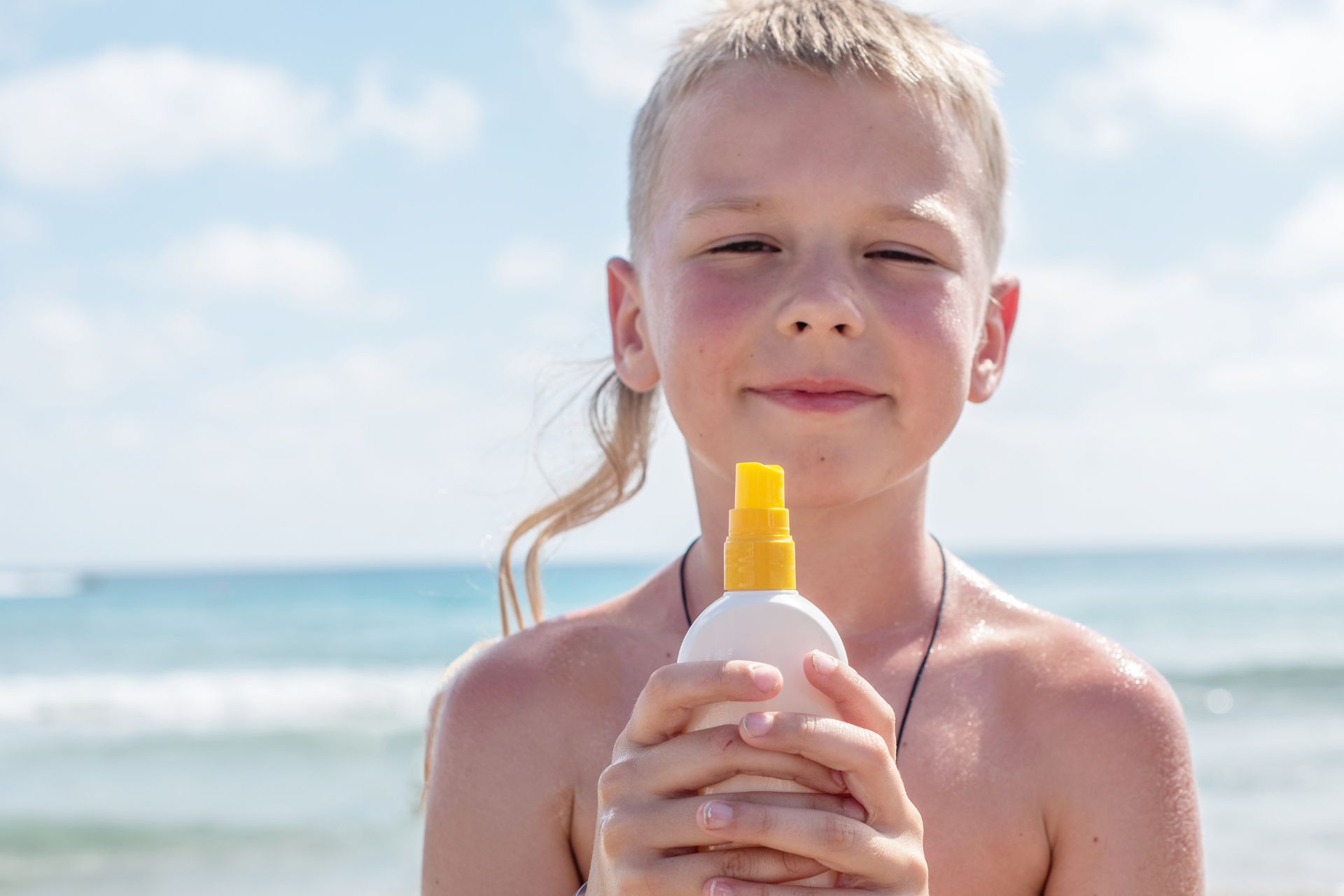
Slip, Slop, Slap and Wrap covers five behaviours. Slip on sun-protective clothing and slip into shade, slop on broad-spectrum sunscreen, slap on a broad-brimmed or bucket hat, and wrap on close-fitting sunglasses. They’re cheap and they fit into a normal school day. Once the policy, the staff and the grounds all back them, they become habit, and staff spend less time reminding students.
Principals and boards set most of those conditions through the timetable, the uniform and the property plan. There’s no statutory requirement for a school to have a sun protection policy. The Cancer Society’s sample policy points out that schools still have general duties to manage the health and safety risk of sun exposure, under the Education and Training Act 2020 for students and the Health and Safety at Work Act 2015 for staff and visitors.
Several steps cost little more than a change of routine:
· Schedule high-exposure activities earlier in the morning or later in the afternoon.
· Build a SunSmart check into planning for sports days, assemblies and other events.
· Make hats part of the expected uniform in Terms 1 and 4.
· Tell whānau ahead of outdoor activities what sun protection their children will need.
On hats, the sample policy suggests a legionnaire hat, a broad brim of at least 7.5cm, or a deep bucket hat with a brim of at least 6cm. It doesn’t recommend caps or visors. Students without a suitable hat play in the shade or indoors. Students or staff can be exempt for cultural or religious reasons, and the policy then leans on shade, sunscreen and sunglasses instead. For clothing, it suggests loose tops with sleeves and, where possible, collars, with knee-length or longer shorts and skirts. Rash tops are encouraged for outdoor swimming.
Sunscreen works only when it’s applied properly and used with the other four behaviours. Schools can keep it at key spots around the grounds, build application time into routines, and remind families that it goes on before outdoor activity and needs reapplying. The sample policy specifies a water-resistant, broad-spectrum sunscreen of at least SPF 30, applied at least 20 minutes before going out and reapplied every two hours. It favours creams, lotions and gels, because aerosols make it hard to apply enough sunscreen evenly. Sunglasses should fit closely and meet the AS/NZS 1067 standard, which is usually marked on the arm or the swing tag.
For boards, shade is also an asset question. Trees, shade sails, covered outdoor learning areas and sheltered spectator spaces make school grounds safer and more usable for years. Where permanent shade isn’t possible yet, gazebos and shade tents still cut exposure at sports days, assemblies and community events. The sample policy asks leadership teams to plan for shade from the start when designing new buildings, playgrounds and high-use areas.
A school-wide approach also helps with equity. When the school supplies the shade, sets the hat rule and keeps sunscreen on hand, a child’s protection stops depending on what their family can provide. It also stops depending on whether the child is confident enough to speak up for themselves.
Education backs up the policy. When students understand UV radiation, the UV Index and why sunburn can happen on cooler or cloudy days, they’re more likely to take part. Free lesson plans and resources on the SunSmart website help teachers connect sun protection with science, health and wellbeing. Staff set the example too. The sample policy asks them to wear hats, protective clothing and sunglasses outside, use SPF 30+ sunscreen and reapply it every two hours, and use shade whenever they can.
Two schools in practice
Medbury School, a Years 1 to 8 boys’ school in Fendalton, Ōtautahi Christchurch, has recently been re-accredited as a SunSmart school. As part of that work, it reviewed the shade across its outdoor spaces.
“Our tarmac and concrete areas, where junior and senior students often gather, can become extremely hot and uncomfortable during the warmer months,” says deputy headmaster Warren Durant. “In response, we have encouraged students to use naturally shaded areas beneath trees on the field and the Junior lawn. This has provided a more comfortable environment while reducing students’ exposure to the sun and UVR.”
The school is now investigating permanent shade sails for those areas, which would be a significant capital investment. Medbury’s Parents’ Association has been fundraising for better shade.
At Huia Range School in Dannevirke, in the Tararua District, deputy principal Sarah Graham says the SunSmart Schools Programme has sharpened the school’s focus on UV harm and sun safety. It has also reinforced the value of a strong policy and shown where the school can still improve. Sarah sees staying SunSmart as part of the school’s duty of care. Sun protection is written into the school’s policy, and it’s one of the ways Huia Range keeps its children safe.
The Cancer Society’s SunSmart Schools Programme is free to join and open to primary and intermediate schools and kura. Early childhood centres and secondary schools can’t be accredited, though the Cancer Society supports them to be SunSmart too. Accreditation covers four areas. Behaviour means hats, clothing and SPF 30+ sunscreen. Environment means providing shade and encouraging students to use it. Curriculum means teaching students about UV and sun protection. Review means the school checks its policy at least every three years. For a board, those four areas double as a checklist.
Around 40% of primary and intermediate schools already have SunSmart status. Depending on the region, accredited schools may receive signage, hats, sunscreen, seedling trees or UV Index boards, and the Cancer Society has a sample policy schools can adapt. With summer coming, schools can apply at www.sunsmart.org.nz/sunsmart-schools.