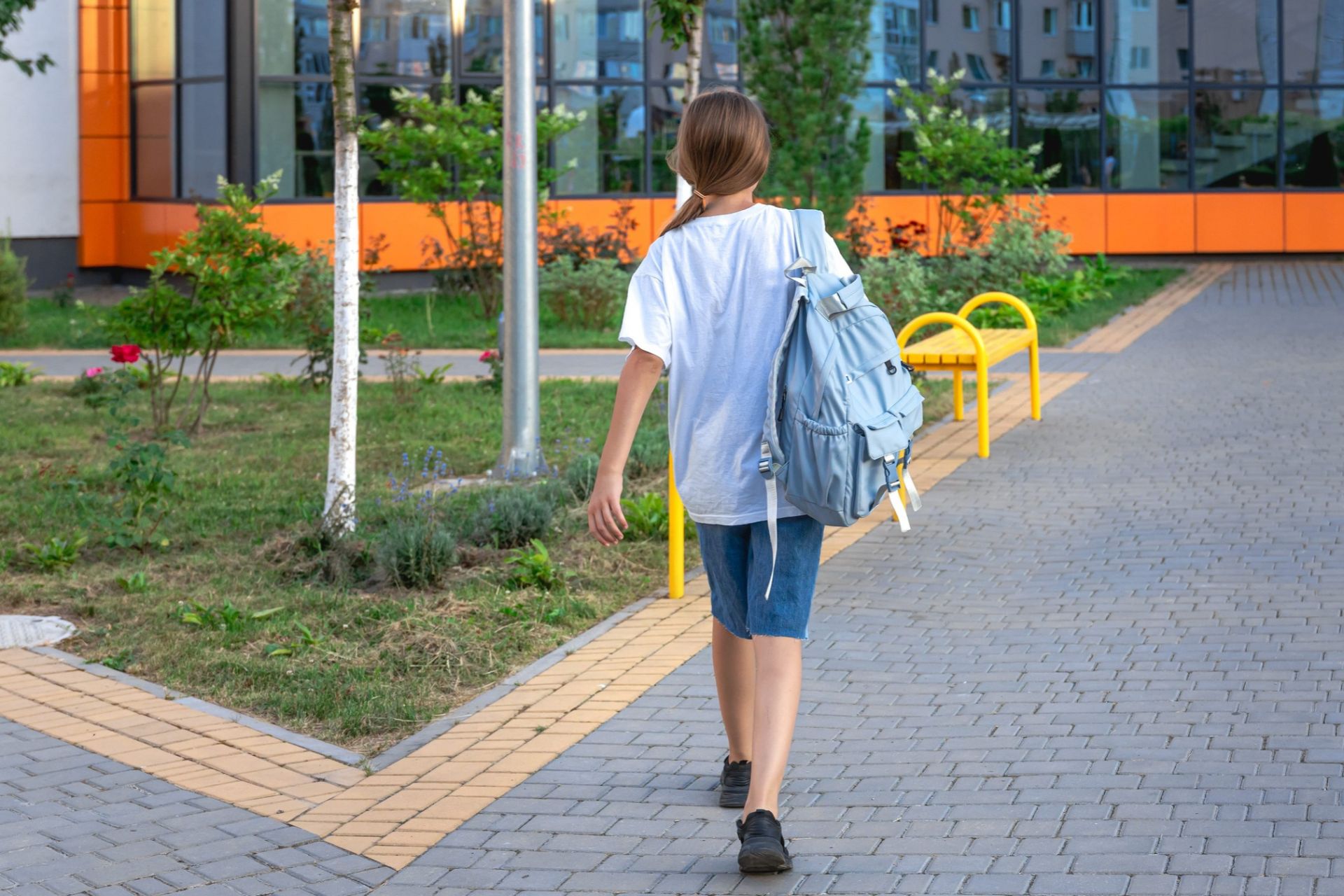

Is my child old enough to get to school on their own? New Zealand law doesn’t give parents a number. It sets a test of reasonableness instead, which leaves the call with whānau.
Schools still have a part to play, because the route is often the deciding factor and schools have a say in how safe it is.
What the law says
Section 10B of the Summary Offences Act 1981 makes it an offence to leave a child under 14 without reasonable provision for their supervision and care, or for an unreasonable time or in unreasonable circumstances. The maximum fine is $2,000.
Govt.nz says a child under 14 can be left “at home or in another place” if those arrangements are in place, and that safe care “can mean different things for different-aged children and their circumstances”.
Oranga Tamariki’s practice guidance for its social workers spells out how that gets judged. It lists the child’s age and maturity, including any disability, how long and how often they’re on their own, how they feel about it, whether they know what to do in an emergency, and hazards such as roads, waterways and the neighbourhood itself.
It tells practitioners to take “a commonsense approach within the context of the whānau or family lifestyle”, and it expects rural tamariki to have different expectations from children in town. It also accepts that before and after school, children often play or explore “independently from adults”.
The road is the real test
Safekids Aotearoa, the injury prevention service at Starship Children’s Hospital, is firm on one point. Children under 10 should cross the street with an adult, it says, because until about that age they have trouble judging how fast cars are going and how far away they are. It also tells parents to warn children about driveways.
Put the two sets of guidance together and the route counts for more than the birthday. An eight-year-old with a short footpath walk and no crossings is in a different position from a 10-year-old who has to get across a busy road at a roundabout.
Families can work through a few questions.
· Does the route cross roads, and is there a pedestrian crossing or a school patrol where it does?
· Has the child walked or biked it with an adult enough times to know it well?
· Do they know what to do if a friend doesn’t turn up, a road is blocked or the weather turns?
· Can they reach a parent, and do they know which adults they can go to on the way?
· Do they actually want to do it?
Fewer children walk or bike to school than a generation ago. In the Ministry of Transport’s Household Travel Survey, the share of 5 to 12-year-olds who walked to school fell from 42% in 1989/90 to 29% in 2010 to 2014, while the share driven rose from 31% to 55%. They were still the latest figures when Environmental Health Intelligence NZ reported them in 2019.
The Ministry of Health’s NZ Health Survey found 43.2% of 5 to 14-year-olds usually walked, biked or used another active mode in 2017/18, and older children were more likely to (49.1% of 10 to 14-year-olds against 37.7% of 5 to 9-year-olds). Both measures include children walking with an adult, so neither tracks independence on its own.
Traffic weighs on parents. In the University of Auckland’s Neighbourhoods for Active Kids study, researchers asked 940 Auckland parents what would make their neighbourhood better for their child to get around independently.
Parents pointed to the need for safer traffic. The researchers describe parents as the “gatekeepers” of children’s independent travel.
Where schools come in
Schools don’t make the decision, but they can make it easier to say yes. Safekids recommends families take part in their school’s travel plan and join a walking school bus where there is one.
A walking bus suits the in-between years well. Children get the habit of the route and the company of friends, with an adult still at the kerb.
A few other steps are worth raising at leadership level.
· Map the main routes to school and flag the hard crossings in a newsletter or on the website.
· Ask the council about the crossings near the gate, and keep school patrols staffed.
· Set up drop-off points a short walk from the gate so younger children can do the last stretch on their own.
· Ask families to let the office know when a child starts travelling alone, and make sure end-of-day release procedures cover it.
Start of term is a natural time to raise it with whānau, while routines are still being set. Families will land in different places, and that’s fine.
The school’s job is the route, so the families who are ready can say yes.